1. What is Hair Loss?
Hair loss means losing hair from part of the head. The most common type is pattern hair loss, which appears in both men and women. By age 50, it affects about half of men and a quarter of women. In men, it usually starts with a receding front hairline or thinning on the crown (the top of the head). In women, the hair usually becomes thinner over the whole scalp. Male-pattern hair loss is believed to come from genetics and male hormones. The cause of female-pattern hair loss is still unclear. Hair loss can also have other causes, such as illness, medication, or stress. If a customer asks about the cause, recommend a consultation with a medical professional.
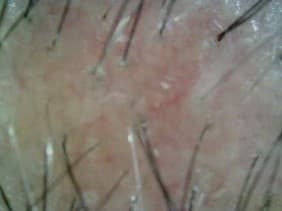
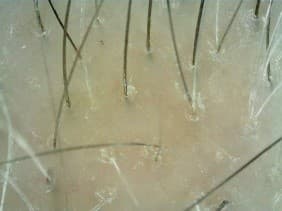
To support hair loss analysis, especially in the early stages when thinning is hard to see with the naked eye, scalp photos are taken with XPL light at four spots, as shown in Figure 1. ChoiceDx AI then calculates hair density at each spot and gives the final hair loss stage.
2. ChoiceDx Hair Loss Grade
The ChoiceDx hair loss grade was developed together with dermatology experts. Following their advice, 4 photos are taken at fixed scalp positions: Frontal, Crown, Temporal1, and Temporal2, as shown in Figure 1.
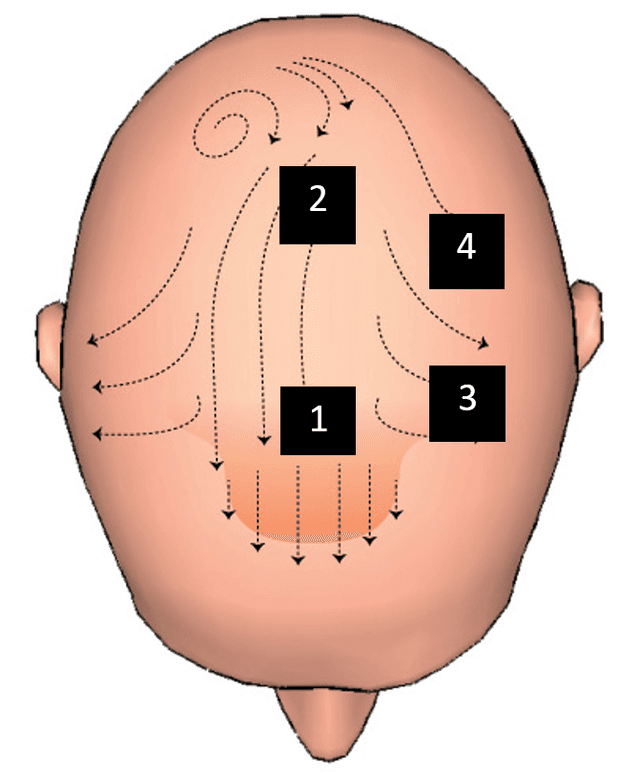
From these scalp photos (Figure 1), ChoiceDx AI counts the number of hairs in a 1 cm² area and estimates hair volume. An optional questionnaire, approved by experts, asks about the customer’s lifestyle and habits to give a fuller picture of their hair. The final hair loss score combines the photo results and the questionnaire. If the questionnaire is skipped, only the photo results are used. Based on the final score, ChoiceDx classifies hair loss into four stages, as shown in Table 1.
What is hair volume? Hair volume shows how much of the scalp in the photo is covered by hair. It depends on two things: how many hairs there are and how thick they are. Thick hairs cover more of the scalp, while thin hairs leave more of the scalp visible. So two customers can have the same hair count but a different hair volume. Hair volume is not shown on the result page, but ChoiceDx AI uses it together with hair count to decide the hair loss stage.
Table 1. Hair loss grade.
| Grade | Description |
|---|---|
| None | No significant hair loss. |
| Beginning stage | Mild hair loss: hair looks slightly thinner. This is the earliest stage. |
| Middle stage | Moderate hair loss: hair density is clearly lower. |
| Last stage | Severe hair loss: hair is very thin, more than in the Middle stage. |
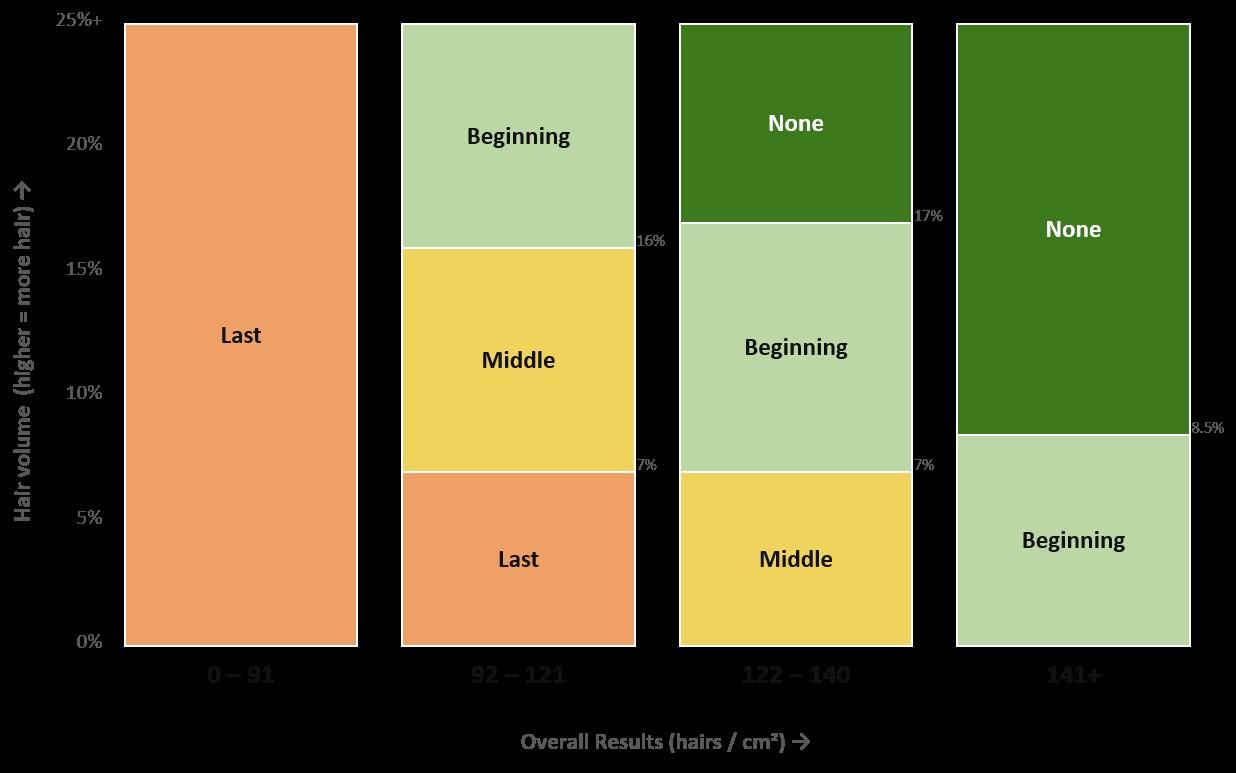
Figure 2 shows how hair count (hairs/cm²) and hair volume together decide the hair loss stage. Hair count is on the bottom axis, and hair volume is on the left axis.
In general, the higher the hair count and hair volume, the less hair loss. This means two customers with a similar hair count can be in different stages, depending on their hair volume.
3. Hair Loss Result Page Interpretation
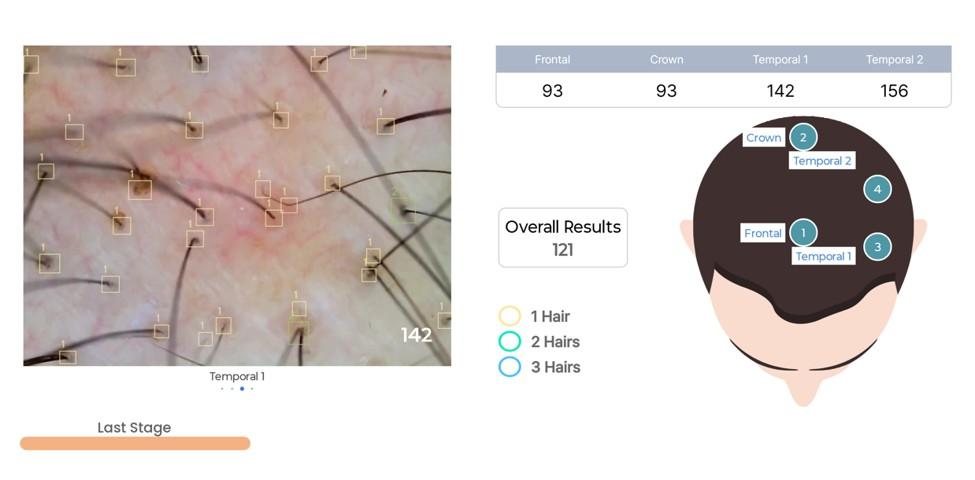
How to read the result page
- 1. Hair count by area – The table at the top shows how many hairs were found in a 1 cm² area at each spot: Frontal 93, Crown 93, Temporal1 142, and Temporal2 156.
- 2. Overall Results – The average of the four spots: 121.
- 3. Hair loss stage – The bar under the photo shows the final result: Last Stage.
Why Last stage, when some numbers are high?
The stage is not decided by hair count alone. ChoiceDx AI also checks the hair volume, which is how much of the scalp is covered by hair. In this example, two spots have a higher hair count, but only a small part of the scalp is covered by hair. Because of this low hair volume, the result is Last stage.
Table 2. Representative images of hair loss grade.
| None |  |  |  |